Showing posts with label Morocco. Show all posts

Friday, December 13, 2013

Morocco opposition file bill to abolish death penalty

A parliamentary opposition group has filed a bill to abolish the death penalty in Morocco, where a moratorium has been in place for 20 years, a member said Thursday.

The bill was filed last week in the lower house by the group of 39 lawmakers from the USFP leftwing opposition party, one of them told AFP, confirming local press reports.

"We are relying on the support of other groups and MPs," to pass the bill, he said, adding that the group would be open to proposed amendments.

The MP said he was "optimistic" about the bill passing "in view of the current reform movement in Morocco".

A parliamentary seminar was held earlier this week initiated by "the network of MPs against the death penalty," a group founded in February and which numbers 210 lawmakers, according to the official MAP news agency.

Morocco's lower house has 325 seats.

If a parliamentary committee approves the proposed bill, it could be voted on in a plenary session next spring.

According to the newspaper L'Economiste, the bill contains four articles, among them a proposal to replace capital punishment with life imprisonment.

No executions have been carried out in the North African country since a moratorium was declared in 1993, but the death penalty has yet to be abolished.

Last year Moroccan courts sentenced 10 people to death for various crimes, according to media reports, and more than 100 people are on death row in the kingdom.

Source: AFP, December 13, 2013

Friday, November 29, 2013

Morocco: murderer and rapist of an 8-year old child sentenced to death

November 28, 2013: The court of appeal of the city of Casablanca, Morocco, sentenced the murderer and rapist of an 8-year old child to death penalty, Moroccan TV channel 2M reported.

The incident happened in April 2012 in the city of Mohammedia (30 Km from Casablanca) when the rapist enticed his victim, Meriem, an 8-year old girl to his shop, raped her then killed her and cut her corpse into pieces.

This is the second time in over a month that a Moroccan court hands death sentence to a rapist.

Last October, the court of Agadir, handed a death sentence to the rapist and murderer of a 3-year old.

Moroccan courts rarely rule in favor of death penalty, therefore, the decision seems to be the result of the civil society’s growing indignation regarding child sexual abuse in the country.

The last time a death sentence was carried out in Morocco was in 1993.

Source: moroccoworldnews.com, November 28, 2013

Saturday, October 26, 2013

Child killer sentenced to death in Morocco

Rabat, Morocco - A Moroccan man convicted of abducting, raping and killing a two-year-old girl has been sentenced to death, the official MAP news agency reported on Friday.

The 30-year-old man, himself the father of a little girl, was also ordered to pay the toddler's family 200 000 dirhams (about R240 000) in compensation, according to the verdict issued Thursday.

Last year Moroccan courts sentenced 10 people to death for various crimes, according to the newspaper L'Economiste. More than 100 people are on death row in the kingdom.

No executions have been carried out in the North African country since a moratorium was declared in 1993, but the death penalty has yet to be abolished.

Sources: Sapa-Agence France-Presse, October 26, 2013

Tuesday, October 23, 2012

Morocco: Former death row inmates speak out at abolition forum

Former convicts on death row in the Middle East and North Africa described awaiting their dreaded fate as "daily torture" from which execution itself was a "deliverance," at an abolition conference in Rabat.

"I spent 10 years on death row in Morocco, and the hardest thing was the wait," Ahmed Hamou told AFP at the three-day conference, which brought together hundreds of officials and civil society representatives from the MENA region.

"In Section B, which is the death row ward at Kenitra prison (40 kilometres north of Rabat), a terrible silence prevails. At the smallest sound, your heart beats faster and you say to yourself: 'That's it. The time has come."

Arrested on political charges in 1983 in Casablanca, at a time when Morocco's largest city was experiencing widespread social unrest, Haou was sentenced to death the following year.

In 1994, under international pressure, he was pardoned by the late king Hassan II, father of the present monarch, Mohammed VI.

"In other wings of the prison, the opening of a cell door is synonymous with hope and freedom. But on death row, it can spell the end and creates an indescribable fear," said Haou, who described his ordeal at the Rabat conference.

"So the wait is like daily torture, and as you wait, execution itself comes to mean deliverance," he said.

A moratorium on executions in Morocco has been in place since 1993, but around 100 convicts remain on death row, with no Arab country having yet abolished capital punishment.

The French ambassador on human rights, Francois Zimery, argued that the north African kingdom was able to play a pioneering role on the issue, pointing to the peaceful atmosphere of the conference, the 1st of its kind.

In their efforts to see the death penalty outlawed, local NGOs also refer to Morocco's new constitution, adopted by referendum last year, which stipulates "the right to life."

Antoinette Chahine, a Lebanese former death row inmate participating in the abolition conference, spoke of her two years in prison in Beirut, after she was wrongly convicted of murder in 1997 and sentenced to death.

"Women sentenced to death in Lebanon are not executed, but no law explicitly mentions that," she told AFP.

"But in spite of that, the wait was terrible, until I was acquitted by the court," Chahine said.

"The uncertainty makes every moment an unbearable form of torture. If I had been executed, the judiciary would have killed an innocent person. That's why I have devoted myself to abolishing the death penalty," she added.

French ambassador Zimery also spoke of the "human realities" involved, and stressed that having a moratorium in place "means there are people on death row, who suffer from the torture and uncertainty of the next day."

France has launched an international campaign, and has urged Morocco to take the lead in being the first Arab country to do away with the death penalty.

According to Amnesty International, the MENA region has the highest execution rate in the world relative to the size of its population.

Source: Agence France-Presse, October 22, 2012

Saturday, March 10, 2012

Morocco rejects bomb case appeal, ups sentence to death

RABAT (Reuters) - A Moroccan court on Friday rejected appeals from two men convicted over the bombing of a cafe in Marrakesh that killed 17 people in April, and raised the life term imposed on one of them to the death penalty, state media reported.

The court sentenced to death Karim Dah, who was jailed in October for being an accomplice in the bomb attack, the deadliest in almost ten years in Morocco.

It also upheld a death penalty on Adel Othmani, convicted of planting the bombs, the official MAP news agency reported.

Othmani had denied the charges, which included making explosives and murder, and said he was a victim of a conspiracy.

He was accused of planting two bombs in a cafe in Jamaa el-Fna, Marrakesh's most popular tourist attraction. Dah, the prosecution said, had been aware of Othmani's plans and assisted him.

The interior ministry said Othmani showed loyalty to al Qaeda but local affiliates of the group have denied involvement.

It was the country's worst bomb attack since coordinated suicide bombings carried out by Islamist militants in the commercial capital, Casablanca, in 2003.

The death penalty is allowed under Morocco's penal code but it has not been carried out since 1992.

Source: Reuters, March 10, 2012

Related articles:
Oct 28, 2011
Prosecutors told the court that Othmani disguised himself as a guitar-carrying hippie, and planted two bombs in a cafe in Djemaa El-Fna, the tourist heart of Marrakesh. He then detonated the explosives using a mobile phone.
Feb 21, 2012
Prosecutors told the court that Othmani disguised himself as a guitar-carrying hippie, and planted two bombs in a cafe in Djemaa El-Fna, the tourist heart of Marrakesh. He then detonated the explosives using a mobile phone.

Tuesday, February 21, 2012

Controversy surrounds death penalty in Morocco

With the new Moroccan constitution, conditions are ripe for abolishing the death penalty, participants in a recent Rabat conference believe.

The event, held by the Moroccan Coalition against the Death Penalty (CMCPM) on February 10th, came as part of efforts to "develop public debate on the need to protect the right to life and abolish the death penalty, and also to harmonise local laws with international human rights mechanisms", according to CMCPM co-ordinator Abderrahim Jamai.

But obstacles abound. Some of them are "ideological remnants that have a religious and societal nature", Jamai pointed out.

"However, the biggest obstacle now is political decision," he argued. "The amendment of constitution is an important step, but is not enough. There is also the constitutional problem related to the interpretation of article 20. The current challenge for us now is to continue to create dynamism in society, with actors in public institutions and political parties in order to ensure respect for human rights, foremost among which is right to life." Article 20 of the constitution states: "Right to life is the first right for every human being. The law protects this right."


Source: magharebia, Feb. 20, 2012

Related article:
Oct 28, 2011
Prosecutors told the court that Othmani disguised himself as a guitar-carrying hippie, and planted two bombs in a cafe in Djemaa El-Fna, the tourist heart of Marrakesh. He then detonated the explosives using a mobile phone.

Friday, February 3, 2012

Germans, Moroccan face death in Malaysia drug case

2 Germans and a Moroccan man are facing the death penalty on charges of smuggling more than 10 kilograms (22 pounds) of methamphetamine into Malaysia, known for its strict anti-drug laws.

A district court near the Kuala Lumpur International Airport charged the three men on January 13 with drug trafficking, said a customs official who declined to be named.

Airport officials arrested the men arriving from Istanbul on January 1 after finding 10.2 kilograms of methamphetamine hidden in the bags they were carrying, the official said Wednesday.

He said no plea had been recorded from the three pending the case’s transfer to a high court once a chemist report on the drugs is ready.

The 2 Germans have parents from Afghanistan but were born in Germany, while the Moroccan has lived in Germany for 15 years, the official said.

Authorities in the Southeast Asian country went on “red alert” late last year following a surge in arrests and drug seizures, tightening passenger and luggage screening.

Despite Malaysia’s strict laws — death by hanging is the mandatory penalty for drug trafficking convictions — Kuala Lumpur airport authorities last year seized some 195 kilograms (430 pounds) of drugs and held more than 30 people.

Smugglers have traditionally arrived from Africa and the Middle East but are increasingly coming from countries such as Turkey and the Philippines, according to officials.

A high court sentenced a 23-year-old Iranian mechanic to death Monday for trafficking 1.4 kilograms of methamphetamine two years ago, according to the official Bernama news agency.

Several other Europeans, including 2 from Britain, 1 from the Netherlands and 1 from France, were arrested in drug raids in Malaysia and charged with trafficking in November.

In October, a Malaysian court sentenced a Japanese woman to death for smuggling methamphetamine into the country in what officials said was the 1st such case involving a citizen of Japan.

Source: Agence France-Presse, Feb. 2, 2012

Friday, January 13, 2012

Moroccan court sentences drug kingpin to death

A Moroccan court has sentenced the head of a major drug gang to death after he was found guilty of manslaughter and narcotics trafficking in a high profile case that also saw security officials convicted of their involvement.

The official MAP news agency said Casablanca's appeal court handed down the death sentence to Najib Zaimi late on Thursday.

The death penalty has not been carried out since 1992 in Morocco, which ranks as the biggest supplier of cannabis to Europe. In October, a court near Rabat sentenced to death the chief plotter of an April Marrakesh bomb attack that killed 17.

Authorities said in 2010 they had dismantled an international drug trafficking ring and discovered 7.5 tonnes of cannabis hidden at a farm near Nador owned by Zaimi, who has denied any wrongdoing.

They said the network had a string of officials on its payroll who helped it bypass police and customs checks, allowing it to transport drugs from Nador to Spain and the Netherlands.

Nador is located in the Rif region of northern Morocco where several thousand people still earn a living from cannabis cultivation despite efforts by authorities to curb the activity.

The prosecution had sought the death sentence for the ring leader and other suspects for their involvement in torturing to death a relative of Zaimi suspected of stealing money from him.

Zaimi has the right to appeal his sentence but it was not clear whether his lawyers had moved to do this.

His right-hand man, Hicham Chouhou, was sentenced to life imprisonment while Mohamed Jalmad, the former head of police in Nador, was sentenced to 3 years in jail.

MAP said Zaimi's father was given 20 years in jail, while 2 other relatives were also sentenced to prison.

It did not detail any sentences given to 30 other suspects also charged in the case. These included 13 members of the paramilitary police and auxiliary forces, a member of military intelligence, an interior ministry official as well as the head of a banking branch and a local reporter.

Source: Reuters, January 13, 2012

Friday, October 28, 2011

Morocco court sentences Marrakesh bomber to death

The mastermind of a deadly bomb attack on a Moroccan cafe in April has been sentenced to death.

The court in Rabat convicted Adel Othmani of organising the attack on the Argana cafe in Marrakesh, which killed 17 people - most of them tourists.

Eight of his associates were given jail sentences for their roles.

Eight French nationals died in the attack, along with two Moroccans and people from Britain, Canada, Portugal, Switzerland and the Netherlands.

It was the deadliest attack in the North African kingdom since bombings in the coastal city of Casablanca in 2003 killed 45 people, including suicide attackers.

Prosecutors told the court that Othmani disguised himself as a guitar-carrying hippie, and planted two bombs in a cafe in Djemaa El-Fna, the tourist heart of Marrakesh.

He then detonated the explosives using a mobile phone.

The motive for the attack was unclear.

The authorities had suggested that Othmani and his accomplices were "admirers of al-Qaeda".

Source: BBC News, October 28, 2011


Marrakesh bomber sentenced to death

A Moroccan judge sentenced Adel Othmani to death on Friday for plotting and carrying out an April 28 bomb attack on a cafe in Marrakesh that killed 17 people, including eight French nationals.

The blasts were the deadliest in Morocco since coordinated suicide bombings carried out by Islamist militants in the commercial capital, Casablanca, in 2003.

After the sentence was read out, female relatives of Othmani and others convicted of being his accomplices began crying and screaming, a Reuters reporter in the court room said.

The prosecution has sought the "harshest possible" sentence against Othmani and eight men accused of being his accomplices. The death penalty is allowed under Morocco's penal code but it has not been carried out since 1992. Othmani had denied the charges, which included making explosives and committing murder. His lawyers said they would lodge an appeal.

Invited earlier on Friday by the three-judge panel to make a final statement before the verdict was given, a bearded Othmani, wearing a grey New York Yankees sweatshirt, said he was the innocent victim of a political plot.

"The whole affair is baseless," he said.

"There is so much injustice in this country ... I'm failing to understand this country. Innocent people find themselves embroiled in cases like this while they are actually being used in political ploys".

The prosecution case was that Othmani, disguising himself as a guitar-carrying hippie, planted two bombs in a cafe in Jamaa el-Fna, Marrakesh's most popular tourist attraction.

The interior ministry said he showed loyalty to al Qaeda but local affiliates of the group have denied involvement.

A man convicted of being his leading accomplice, Hakim Dah, was given life in jail.

Seven others were given sentences ranging from two to four years in prison for offences that included being members of an illegal organisation, helping prepare the bombing and failing to tell police about the bomber's identity.

Attending the trial were mostly French relatives of the victims of the attack. Some carried pictures of their slain relatives while others gathered around a female translator.

Lawyers for the victims' relatives had said they wanted the suspects to be given tough sentences but that they did not want the death penalty.

Source: HindustanTimes, October 28, 2011

Verdict in Morocco blasts case expected Friday

The trial of 9 people accused over an April bomb attack that killed 17 in Marrakesh neared closure Thursday as a lawyer for the alleged mastermind insisted his client was innocent.

Prosecutors say Adil al-Atmani and eight accomplices orchestrated the April 28 blast at a cafe packed with European tourists, but defence lawyer Hassan Mouhib told the court in Sale, near the capital Rabat, that the government had not proved its case.

A final hearing is set for Friday with a verdict expected later in the day against the suspects who all deny guilt in the case.

Mouhib asked the tribunal to be "fair" in judging his client Atmani, who initially admitted to his role in the bombing but later retracted his confession, claiming he had been set up.

Prosecutors last week said Atmani and co-accused Hakim al Dah should be sentenced to death.

But lawyers representing the victims' families previously asked the court to sentence the accused to life in prison and not death, partly to deprive them of boasting that they will die as martyrs.

Mouhib invoked Morocco's new constitution, which was massively backed in a July referendum, which guarantees the "right to life."

Morocco has not enforced its death penalty provision since 1992.

Atmani has said he made trips to Libya, Mauritania, Mali and Algeria, which prosecutors have pointed to as proof of his links to global jihadist organisations, including Al-Qaeda.

But his lawyer dismissed those arguments, saying his client had travelled in pursuit of trade opportunities.

According to co-defendant Mohamed Njim, Atmani previously expressed a desire to practice jihad (holy war) in Chechnya.

Moroccan authorities had initially blamed Al-Qaeda's north African branch for the bombing but AQIM, seen behind a series of attacks and kidnappings in north Africa, denies responsibility.

Source: Yahoo.com, October 27, 2011

Monday, September 26, 2011

Opposition to death penalty rising

The drop in executions is an indication that the world is moving in the direction urged by the UN.

The approval by the UN General Assembly in December 2007 of the Resolution for a Universal Moratorium against Capital Punishment was a fundamental step forward not only for the anti-death penalty campaign but also for the affirmation of the rule of law and of those natural rights historically won and often written into national law but not always respected.

After the vote, the usual practitioners of realpolitik tried to diminish its import, saying if would serve no purpose. It is true that the UN cannot force any member country to abolish the death penalty, but the moral force and political message sent by the resolution are undeniable. For the first time ever, the United Nations established that capital punishment is a matter of individual rights and not simply an internal question for national judicial systems. It also sent the message that the elimination of capital punishment would constitute a significant advance for the system of human rights.

Since the vote, it has had concrete effects in many countries, as documented in the latest report by Hands off Cain.

Drop in executions

The legal abolition of the death penalty in recent years in many states of the US — which saw a drop in executions from 52 in 2009 to 46 in 2010, the reduction that is apparently occurring in China, the reduction in the number of capital offenses in China and Vietnam, and the thousands of death sentences commuted in Pakistan, Kenya, Ethiopia, and Burma are not insignificant developments. While they cannot be seen as prelude to the immediate abolition of the death penalty, they are a clear indication that the world is moving in the direction urged by the United Nations.

Also significant is the abolition of the sanction in recent years in Africa and particularly countries like Rwanda and Burundi, symbols of a continent that has been battered more than any other in recent history by human tragedy: genocide, mutilation, mass rape, summary executions, and deportation.

In Egypt, Hosni Mubarak risks falling victim to the death penalty that he himself, during his three decades of uninterrupted rule, extended to forty crimes. Ali Abdalla Saleh in Yemen and Bashar al- Assad in Syria are still resisting but at the price of a war they have chosen to launch against their own people.

Muammar Ghaddafi received an arrest warrant for crimes against humanity issued by the International Criminal Court. In Morocco after the huge anti-establishment protests in February, King Mohammed decided grant the release of 92 political prisoners and commute the death sentences of 5 others and to transform the absolute monarchy into a constitutional monarchy. In Jordan, the death penalty has not been implemented since 2006, which suggests that the monarchy is headed towards abolition. In Lebanon a de facto moratorium has been in place since 2004. Djibouti constitutionally abolished its death penalty.

Last December, these and other Arab countries, including Bahrain, the Arab Emirates, Mauritania, and Oman, which all abstained from the first vote, did not oppose the new resolution on abolition that was approved by the UN. Algeria not only voted for it but was one of the co-sponsors.

To uproot once and for all this aberrant and contradictory principle that life must be defended by inflicting death, the countries that supported the UN moratorium must insure that it is respected in all circumstances.

But it isn’t all good news: the Hands Off Cain report shows that Iran, which has consistently finished among the world's top executioners, kicked off the new year with an orgy of executions. In North Korea, public executions tripled in recent years. In Iraq, even under the “democratic” government of Nouri al-Maliki, the pace of executions has continued uninterrupted.

In China as in Iran, and North Korea as in Iraq, it will be the “parallel democracy” by the Radical Party that will have to compensate for the lack of an official presence on the part of the so-called liberal, civil, abolitionist world. In fact it was Radical Party leader Marco Pannella who, after the announcement that former Iraqi foreign minister Tariq Aziz was condemned to death, staged a hunger strike to obtain “a moratorium against capital punishment for Tariq Aziz as well”, partly to break the tragic continuity with the sanction’s vogue under Saddam Hussein but also to preserve a key witness for the reconstruction of the historical record and the responsibility of the regime up until the war — a war that, it is now clear and amply documented, was set in motion by Bush and Blair precisely to prevent peace and the realisation of our plan of bringing about a free Iraq through the exile of Saddam Hussein and the installation of a fiduciary UN administration.

Source: IPS, Sept. 25, 2011

Wednesday, December 22, 2010

UN votes to reinstate resolution condemning execution of gays

The United Nations General Assembly has voted to restore a reference to sexual orientation in a resolution opposing the unjustified killings of minority groups.

Last month, a UN panel deleted a reference to gays and lesbians in resolution introduced by Morocco and Mali. The vast majority of countries in support were African or Arabic.

Many of the supporting countries criminalise homosexuality and five treat it as a capital offence.

But today, the UN General Assembly voted 93 in favour of the United States’ proposal to restore the reference to sexual orientation, 55 countries voted against and 27 abstained. The assembly then approved the amended resolution with 122 in favour, none against and 59 abstentions.

The amendment passed last month called for the words “sexual orientation” to be replaced with “discriminatory reasons on any basis”. The resolution made explicit reference to a large number of groups, including human rights defenders, religious and ethnic minorities and street children.

It narrowly passed 79-70 and was then approved by the UN General Assembly committee with 165 in favour and ten abstentions. The motion condemns extra-judicial, summary and arbitrary executions and other killings, is voted on by the UN General Assembly every two years. For the past ten years, it contained references to sexual orientation.

Related articles: 'UN deletes gay reference from anti-execution measures', Reuters, Nov. 16, 2010, Pink News, Nov. 19, 2010, Pink News, Dec. 14, 2010, The Guardian, December 21, 2010

Source: Pink News, December 21, 2010

Friday, November 19, 2010

UN deletes gay reference from anti-execution measures

A United Nations panel has deleted a reference to gays and lesbians in a resolution condemning unjustified executions.

The motion was introduced by Morocco and Mali and the vast majority of countries in support were African or Arabic.

Many of the supporting countries criminalise homosexuality and five treat it as a capital offence.

The amendment called for the words “sexual orientation” to be replaced with “discriminatory reasons on any basis”. The resolution makes explicit reference to a large number of groups, including human rights defenders, religious and ethnic minorities and street children.

It narrowly passed 79-70 and was then approved by the UN General Assembly committee with 165 in favour and ten abstentions.

The amendment, which condemns extrajudicial, summary and arbitrary executions and other killings, is voted on by the UN General Assembly every two years.

It has contained a reference to sexual orientation for the last ten years.

Cary Alan Johnson, executive director of the International Gay and Lesbian Human Rights Commission, said: “This vote is a dangerous and disturbing development.

“It essentially removes the important recognition of the particular vulnerability faced by lesbian, gay, bisexual and transgender people – a recognition that is crucial at a time when 76 countries around the world criminalise homosexuality, five consider it a capital crime, and countries like Uganda are considering adding the death penalty to their laws criminalising homosexuality.”

Source: Pink News, November 19, 2010


‘Shameful’ UN vote ‘may lead to more gay executions’

A United Nations panel’s decision to remove sexual orientation from an anti-execution resolution is “shameful” and may encourage murders of LGBT people, gay rights campaigners say.

The body voted this week on the amendment, which was passed 79-70. The vast majority of countries in support of the change were African or Arabic.

Veteran gay rights activist Peter Tatchell said the move was a “shameful day in United Nations history” and would give a “de facto green light to the on-going murder of LGBT people by homophobic regimes, death squads and vigilantes”.

Gay rights group Stonewall also criticised the move and said the government should “lead from the front foot” to end homophobic persecution.

Chief executive Ben Summerskill said: “The vote by a UN panel to remove sexual orientation from this significant resolution is deeply disturbing. Lesbian, gay and bisexual people face violence, abuse and in some states, execution, because of their sexual orientation.

“This is a worrying and regressive step. We call on the UK government to lead from the front foot to end the persecution of gay people in other countries.’

The resolution, which the UN votes on every two years, has contained a reference to lesbian and gay people since 1999. It condemns extrajudicial, summary and arbitrary executions and other killings.

It still includes references to a variety of other groups, such as human rights defenders, religious and ethnic minorities and street children.

Introduced by Morocco and Mali, the amendment called for the words “sexual orientation” to be replaced with “discriminatory reasons on any basis”.

Mr Tatchell said homophobic countries would “take comfort from the fact that the UN does not endorse the protection of LGBT people against hate-motivated murder”.

He added: “The UN vote is in direct defiance of the Universal Declaration of Human Rights, which guarantees equal treatment, non-discrimination and the right to life. What is the point of the UN if it refuses to uphold its own humanitarian values and declarations?

“Many of the nations that voted for this amendment want to ensure that their anti-gay policies are not scrutinised or condemned by the UN. Even if they don’t directly sanction the killing of LGBT people, they have lined up alongside nations that do.”

Mr Tatchell also criticised South Africa and Cuba, who voted in favour of the amendment.

“Presidents Raul Castro and Jacob Zuma should hang their heads in shame. They’ve betrayed the liberation ideals that they profess to uphold,” he said.

Earlier this week, Cary Alan Johnson, executive director of the International Gay and Lesbian Human Rights Commission, said the vote was a “dangerous and disturbing development” for gay people.

Source: Pink News, November 19, 2010


UN panel cuts gay reference from violence measure

November 16, 2010: Arab and African nations succeeded in getting a U.N. General Assembly panel to delete from a resolution condemning unjustified executions a specific reference to killings due to sexual orientation.

Western delegations expressed disappointment in the human rights committee's vote to remove the reference to slayings due to sexual orientation from the resolution on extrajudicial, summary and arbitrary executions.

The General Assembly passes a resolution condemning extrajudicial, summary and arbitrary executions and other killings every two years. The 2008 declaration included an explicit reference to killings committed because of the victims' sexual preferences.

But this year, Morocco and Mali introduced an amendment on behalf of African and Islamic nations that called for deleting the words "sexual orientation" and replacing them with "discriminatory reasons on any basis."

That amendment narrowly passed 79-70. The resolution then was approved by the committee, which includes all 192 U.N. member states, with 165 in favour, 10 abstentions and no votes against.

The resolution, which is expected to be formally adopted by the General Assembly in December, specifies many other types of violence, including killings for racial, national, ethnic, religious or linguistic reasons and killings of refugees, indigenous people and other groups.

"It's a step backwards and it's extremely disappointing that some countries felt the need to remove the reference to sexual orientation, when sexual orientation is the very reason why so many people around the world have been subjected to violence," said Philippe Bolopion of Human Rights Watch.

Source: Reuters, November 16, 2010


Countries that voted to delete sexual orientation from anti-execution measures:

Afghanistan, Algeria, Angola, Azerbaijan, Bahamas, Bahrain, Bangladesh, Belize, Benin, Botswana, Brunei Dar-Salam, Burkina Faso, Burundi, Cameroon, China, Comoros, Congo, Cote d’Ivoire, Cuba, Democratic People’s Republic of Korea, Democratic Republic of Congo, Djibouti, Egypt, Eritrea, Ethiopia, Ghana, Guyana, Haiti, Indonesia, Iran, Iraq, Jamaica, Jordan, Kazakhstan, Kenya, Kuwait, Lebanon, Lesotho, Liberia, Libya, Madagascar, Malawi, Malaysia, Maldives, Mali, Morocco, Mozambique, Myanmar, Namibia, Niger, Nigeria, Russian Federation, Rwanda, Saint Kitts and Nevis, Saint Lucia, Saint Vincent and Grenadines, Saudi Arabia, Senegal, Sierra Leone, Somalia, South Africa, Sudan, Suriname, Swaziland, Syrian Arab Republic, Tajikistan, Tunisia, Uganda, United Arab Emirates, United Republic of Tanzania, Uzbekistan, Vietnam, Yemen, Zambia, Zimbabwe.

Countries that voted against:

Andorra, Argentina, Armenia, Australia, Austria, Belgium, Bhutan, Bosnia-Herzegovina, Brazil, Bulgaria, Canada, Chile, Costa Rica, Cyprus, Czech Republic, Denmark, Dominican Republic, Ecuador, El Salvador, Estonia,Finland, France, Georgia, Germany, Greece, Guatemala, Hungary, Iceland,India, Ireland, Israel, Italy, Japan, Latvia, Liechtenstein, Lithuania, Luxembourg, Malta, Mexico, Micronesia, Monaco, Montenegro, Nepal, Netherlands, New Zealand, Norway, Panama, Paraguay, Peru, Poland, Portugal, Republic of Korea, Republic of Moldova, Romania, Samoa, San Marino, Serbia, Slovakia, Slovenia, Spain, Sweden, Switzerland, Former Yugoslav Republic of Macedonia, Timor-Leste, Ukraine, United Kingdom, United States, Uruguay, Venezuela.

Countries that abstained:

Antigua-Barbuda, Barbados, Belarus, Cambodia, Cape Verde, Colombia, Fiji, Mauritius, Mongolia, Papau New Guinea, Philippines, Singapore, Sri Lanka, Thailand, Trinidad and Tobago, Tuvalu, Vanuatu.


The International Lesbian, Gay, Bisexual, Trans, and Intersex Association (ILGA) said in a May 2010 report that 76 nations criminalize "consensual sexual acts between persons of the same sex in private over the age of consent."  To see the full report and maps as well as details on gay equality around the world, visit tinyurl.com/ilga-ssh.


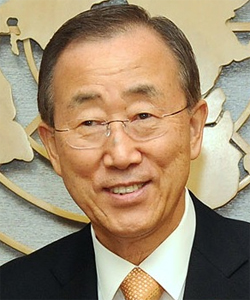
UN secretary-general Ban Ki-moon on ending homophobia

UN secretary-general
Ban Ki-moon
UN secretary-general Ban Ki-moon’s remarks at a panel on Human Rights Day.

Thank you, Ambassador Jim McLay of New Zealand, Ambassador Ranko Viloviæ of Croatia, Excellencies, Ladies and Gentlemen, and particularly representatives of civil society, it is a great pleasure.

Thank you all for coming to this important event.

Today is Human Rights Day – a day we dedicate to defending freedoms and protections for all people.

We know how controversial the issues surrounding sexual orientation can be.

In the search for solutions, we recognise that there can be very different perspectives.

And yet, on one point we all agree – the sanctity of human rights.

As men and women of conscience, we reject discrimination in general, and in particular discrimination based on sexual orientation and gender identity.

When individuals are attacked, abused or imprisoned because of their sexual orientation, we must speak out.

We cannot stand by. We cannot be silent.

This is all the more true in cases of violence.

These are not merely assaults on individuals.

They are attacks on all of us.

They devastate families. They pit one group against another, dividing larger society.

And when the perpetrators of violence escape without penalty, they make a mockery of the universal values we hold dear.

We have a collective responsibility to stand against discrimination, to defend our fellow human beings and our fundamental principles.

Ladies and gentlemen,

Liberal democracy has spread in many parts of the world in recent decades.

In general, more and more of us have learned to cherish our diversity.

Today, many nations have modern constitutions that guarantee essential rights and liberties.

And yet, homosexuality is considered a crime in more than 70 countries.

This is not right.

Yes, we recognise that social attitudes run deep.

Yes, social change often comes only with time.

Yet, let there be no confusion:

Where there is tension between cultural attitudes and universal human rights, universal human rights must carry the day.

Personal disapproval, even society’s disapproval, is no excuse to arrest, detain, imprison, harass or torture anyone – ever.

Excellencies, ladies and gentlemen,

From my first days in office as secretary-general, I have spoken out against stigma and discrimination.

I have worked, with some success, to persuade governments to lift travel restrictions on people with HIV.

During my recent trips to Africa, I urged leaders to do away with laws criminalising homosexuality.

I was particularly happy and pleased that, when I was visiting Malawi, I was able to secure the release of a young gay couple sentenced to 14 years in prison. President Mutharika kept his promise and he released them during my stay, on the very day when I urged him to do so.

Yesterday evening, I spoke to a Human Rights Day event at the Ford Foundation. It was called “Speak Up,” a conversation with human rights defenders. Some of you are wearing badges.

One of my fellow speakers was a young activist from Uganda.

Frank Mugisha has been working with a variety of civil society groups to stop legislation that institutionalises discrimination against gay and lesbian people.

With extraordinary eloquence, he appealed to us, the United Nations, for help.

He asked us to rally support for the decriminalisation of homosexuality everywhere in the world.

And that is what we will do.

We have been called upon, and we will answer.

Ladies and gentlemen,

In all these kinds of cases, I put myself on the line.

I take pains to find the right balance between public and private diplomacy to reach difficult solutions.

I will continue to do so.

I will continue to speak out, at every opportunity, wherever I go.

And I will do so because this is the right thing to do.

Because this cause is just.

That is why this day, this very special day, means so much to me.

Human Rights Day commemorates the Universal Declaration of Human Rights.

It is not called the partial declaration of human rights.

It is not the sometimes declaration of human rights.

It is the universal declaration, guaranteeing all human beings their basic human rights ? without exception.

Violence will end only when we confront prejudice.

Stigma and discrimination will end only when we agree to speak out.

That requires all of us to do our part.

To speak out – at home, at work, in our schools and communities.

To stand in solidarity.

Your discussions today are part of that larger campaign, yours and mine.

Together, we seek the repeal of laws that criminalise homosexuality, that permit discrimination on the basis of sexual orientation or gender identity, that encourage violence.

People were not put on this planet to live in fear of their fellow human beings.

The watchwords of civilization have always been tolerance, understanding and mutual respect.

That is why we are here today.

And that is why we ask the nations and the peoples of the world to join us.

To join us in common cause in the name of justice and a better life for all.

Thank you very much.

Source: Pink News, December 14, 2010


Gay rights row breaks out over amended UN resolution

US 'incensed' after reference to sexual orientation dropped from protected minorities list

A culture war has broken out at the UN over whether gay people should be offered the same protections as other minorities whose lives are threatened.

The issue will come to a head today when the general assembly votes on renewing its routine condemnation of the unjustified killing of various categories of vulnerable people.

It specifies killings for racial, national, ethnic, religious or linguistic reasons, and includes refugees, indigenous people and other groups.

But because of a change promoted by Arab and African nations and approved at committee level, the resolution drops "sexual orientation" and replaces it with "discriminatory reasons on any basis".

The US government says it is incensed at the change, as are gay rights campaigners. "Even if those countries do not support gay rights, you would think they would support our right not to be killed," said Jessica Stern of the New York-based International Gay and Lesbian Human Rights Commission.

Stern said gay people all over the world were frequent targets of violence because of their sexual orientation.

Authorities in Jamaica are investigating a possible hate crime after the killing of a man who belonged to the country's sole gay rights group, earlier this month.

Uganda, among 76 countries that criminalise homosexuality, is debating whether to join the five other countries that consider it a capital crime.

The biennial resolution does not refer to sexual orientation for the first time since 1999. The US ambassador, Susan Rice, said she was "incensed" that the reference was removed, and that the US will attempt to restore it.

The battle underscores the historic split over gay rights among UN members and their diverse religious and cultural sensibilities.

Activists say gay and lesbian issues got only minimal attention at the UN a decade ago.

"There has been slow but steady progress on lesbian, gay, bisexual and transgender rights at the UN," Stern said.

Stern cited as progress UN secretary general Ban Ki-moon's "landmark" speech during a gay rights forum at UN headquarters on Human Rights Day, 10 December, calling for an end to laws around the world that make it a crime to be homosexual.

But as gay rights gain more acceptance in the UN system, some member states are pushing back, said Mark Bromley, of the Washington-based Council for Global Equality, which aims to advance gay rights in American foreign policy. "I think some states are uncomfortable and they are organising to limit engagement on the issue."

"We are seeing a backlash," agreed Stern. "This is an illustration of the tensions around culture at the United Nations, and how power plays out and alliances are made."

On behalf of African countries, Benin introduced the amendment that deleted the sexual orientation reference. The largely Christian country of eight million with a sizeable Muslim population argued that "sexual orientation had no legal foundation in any international human rights instruments".

Morocco, an Arab country that is almost exclusively Muslim, asserted that such selectivity "accommodated particular interests and groups over others" and urged all UN member states "to devote special attention to the protection of the family as the natural and fundamental unit of society".

Western nations opposed the move to delete the mention of sexual orientation. Britain called it "an affront to human dignity", while France and Norway said the move was "regrettable".

The amendment was passed at a committee meeting last month by 79-70, with 17 abstentions.

General assembly resolutions are not legally binding, but rather reflect the views of the majority of the world's nations.

Mark Kornblau, spokesman for the US mission to the UN, said the US will introduce an amendment next week to restore the previous language, including the phrase "sexual orientation" because "this is an issue that is important to us".

Gay groups and human rights activists also have been lobbying missions to the UN in New York in recent days, urging in particular, the delegations that abstained on the amendment to help restore the mention of sexual orientation.

"We only need a few more countries and we can change this vote around," said Boris Dittrich of Human Rights Watch.

But gaining the world's support for gay rights will take far longer.

More than two-thirds of UN members, many of them Muslim nations, are refusing to sign a separate UN statement condemning human rights violations based on sexual orientation and gender identity, especially with regard to the application of the death penalty and extrajudicial, summary or arbitrary executions.

Under the Bush administration in 2008, the US refused to join all other western nations in signing the declaration, arguing that the broad framing of the language in the statement might conflict with US laws.

After Barack Obama took office last year, the US joined other member states to support the declaration, saying it found that the language did not conflict with American laws. Sixty-eight of the UN's member countries have now signed the declaration, and 124 countries have abstained.

Source: The Guardian, December 21, 2010

Dec. 22, 2010 Update: 'UN votes to reinstate resolution condemning execution of gays', Pink News, Dec. 22, 2010

Friday, August 13, 2010

Dictators and the death penalty

Abolition movements are gaining momentum in North Africa, but authoritarian regimes appear reluctant to remove capital punishment from the penal code.

“RULERS who could (abolish the death penalty) will not give it up easily,” says Nasser Amin, director of the Arab Centre for the Independence of the Judiciary and Legal Profession. Capital punishment is legislated in all North African countries. Libya and Egypt proscribe the death penalty for dozens of crimes ranging from murder to treason. Executions are carried out regularly by hanging or firing squad. Morocco, Algeria and Tunisia have moratoriums on executions, though courts continue to pronounce death sentences for various offences. Hundreds of prisoners wait on death row.

Abolition campaigns have focused efforts on convincing regime leaders and senior religious authorities of the ineffectiveness and contradictions of capital punishment. Activists have pressed governments to adopt UN Resolution 62/149, which calls for a moratorium on executions as a step towards striking the death penalty from the statute books. Only Algeria has voted in favour of the resolution. The absence of democracy in the region could be seen as an obstacle – or an opportunity – to abolition, says Amin.

Death penalty based on Sharia

“We’re not talking about democracies here,” he says. “To effect any change in this region you must convince the head of state. If he agrees, the parliament will agree.” But dictators have their reasons for maintaining the status quo. One oft-cited argument is that capital punishment is needed to counter rising crime rates. Hafez Abou Seada, chairman of the Egyptian Organisation for Human Rights (EOHR), isn’t buying it. He says the death penalty is an ineffective deterrent against crime, while its implementation risks the shedding of innocent blood. “For a long time we’ve used death penalty against drug dealers, yet drugs are widely available today, and at a very cheap price,” he told IPS. “Legislators tried to send a strong signal by the death penalty, but after strengthening the sentence what happened? Nothing.”

According to Abu Seada, Arab regimes promote the misconception that capital punishment is proscribed in Islam. In Egypt, for instance, the grand mufti, a state-appointed religious authority, is consulted before any execution order is carried out. The mufti rarely contradicts court rulings. “They (regimes) interpret Sharia according to their purposes,” he says. Sharia, or Islamic law, mandates capital punishment for only four offences: premeditated murder, adultery, apostasy and banditry. It sets strict requirements and offers alternative punishments such as compensation and exile. Even in the case of premeditated murder, the Qu’ran proscribes qasas (“an eye for an eye”), but also provides the option of the victim’s family accepting blood money in lieu of execution.

“Governments cannot really say the death penalty is taken from Sharia, because there are crimes such as adultery and apostasy that are punishable by death according to Sharia and are not part of the national legislation, while others (such as arson) are not in Sharia yet appear in national legislation,” says Taghreed Jaber, regional director of Prison Reform International. “In Morocco, for instance, there are 365 crimes that are punishable by death – which goes far beyond what Sharia calls for.”

Instrument of repression

If capital punishment is not an effective solution to crime, nor practised in accordance with Islam, why are North African leaders so reluctant to remove it from their penal code? “The death penalty is an effective instrument of fear and repression,” argues Amin. “It can be used to (intimidate) or eliminate political opponents.” Legislation blurs the grey line between terrorism and political activism, giving authorities broad discretion to arrest and execute dissidents. Capital crimes are usually tried in special courts, often without the right to appeal. “If you look at the crimes punishable by death you will notice that many of them are related to the security and stability of the state – which (encompasses) most political activities,” says Jaber.

She points out that while the threat of execution may not be intimidating to extremists ready to commit suicide for their cause, it will make political activists think twice before speaking out against the government. One problem throughout the region, says Jaber, is that the death penalty still enjoys popular support, as well as the backing of Islamic groups. If abolition movements can educate people on the political nature of capital punishment, and its divergences from Sharia, it could erode this support. The public would view the death penalty not as a criminal or religious issue, but as a violation of human rights.

Source: Helsinki Times, August 12, 2010

Wednesday, March 31, 2010

North Africa: Not Quite Islamic Executions

The Middle East leads the world in executions after China, says an annual Amnesty International report released Tuesday.

"The Middle East and North Africa have the highest per capita rate of executions in the world, according to our figures," Phillip Luther, deputy director for the region with Amnesty, tells IPS.

The Middle East: must be Islam then, most people would imagine. Wrong.

"If you take Egypt, or Syria, or Yemen, or Iraq, the vast majority of death sentences and executions carried out in those countries have nothing to do with Islamic law in any sense," says Luther. "They are on the basis of civil codes - often inherited, and the death penalty provisions within it - from the previous colonial period." Most executions are carried out under the penal code for offences related to drugs and violent crimes, Luther says.

So are executions in non-Islamic countries such as the U.S. and India, to say nothing of China, which is believed to execute thousands a year that it lets the world know nothing about. And Amnesty acknowledges as much, challenging China this year to produce a figure rather than guessing one of its own.

But religion is not behind most executions in the Islamic world of the Middle East and North Africa - and not even in countries such as Saudi Arabia and Iran, says Luther. "If you look at the majority of those sentenced and executed (in Saudi Arabia and Iran), they are executed on the basis of penal codes. Those sentenced under Islamic law are very few."

In Iran, many have been charged with enmity against god, "which clearly has a religious sanction," says Luther, "but which is used in a political way against people who are perceived by the state of rebelling against the state." The motives in Iran are more political than religious because among those executed are a disproportionate number of political prisoners, or members of ethnic or religious minorities.

The sanction comes in the name of religion, but is basically a handle used by the state for its own political ends, and not because it's out to create Islam justice in society.

Amnesty International recorded 388 executions in Iran last year, but says the true figure could be higher. "At least 14 executions took place in public," the report says. "In one 8-week period between the presidential election on Jun. 12 and the inauguration of Mahmoud Ahmadinejad for a second term as President on Aug. 5, Amnesty International recorded 112 executions; by contrast, in the 5 1/2 months between Jan. 1 and Jun. 12, at least 196 executions had taken place."

Many countries within the region such as Algeria, Morocco, Tunisia and Lebanon have maintained a long-term moratorium on the death penalty of at least 10 years.

The Amnesty report lists 624 executions across the Middle East and North Africa last year. There are no definite figures over earlier years to compare this with, but the general trend in the region is downward, says Luther. "Only 7 countries in this region carried out executions last year (Egypt, Iran, Iraq, Libya, Saudi Arabia, Syria and Yemen). In terms of the number of countries, that trend is going down, as it is across the world as a whole."

At the same time there is a louder legislative debate in many of these countries to at least reduce the number of crimes punishable by death. "In Lebanon the ministry of justice itself is campaigning to end the death penalty," says Luther. "Algeria was one of the co-sponsors in the U.N. General Assembly in 2008 for a call for a global moratorium, the first Middle East or North African state to do so."

But even though executions are carried out mostly under the penal code, they are at their highest in Iran and Saudi Arabia. "In Saudi Arabia, the authorities continued to execute at an alarming rate," the Amnesty report says. "At least 69 people were publicly beheaded during 2009.

"At the end of 2009 Amnesty International knew of at least 141 people on death row in Saudi Arabia, including at least 104 foreign nationals, mostly from developing countries in Africa, Asia and the Middle East. Prisoners are sentenced in largely secret and unfair trials, often without a defence lawyer, and so the true figures for those under sentence of death are believed to be much higher."

Source: All Africa News, March 31, 2010